tour.crExplore tours ↗
Morning snorkel sails vs. afternoon sunset catamaran cruises
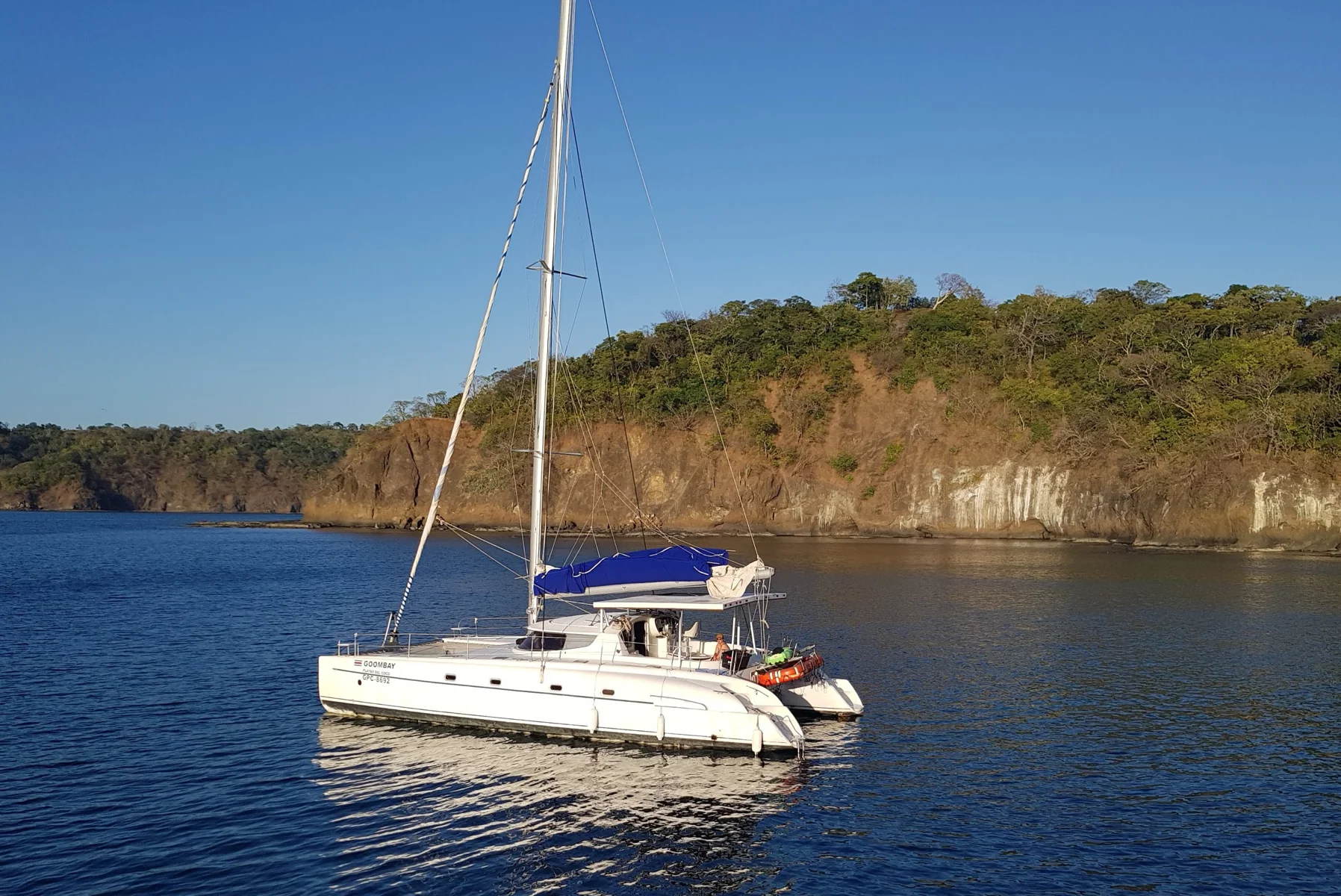
Along Costa Rica’s Pacific coast—from the Gulf of Papagayo, Playas del Coco, Flamingo Marina, and Tamarindo in Guanacaste down to Marina Pez Vela in Quepos/Manuel Antonio—sailing catamarans and trimarans run two distinct daily shifts: a morning departure (typically 8:00 a.m.–12:30 p.m.) and a sunset departure (typically 1:30–6:00 p.m.).
If underwater visibility and calm anchorage water are your top priorities, choose the morning charter before afternoon thermal breezes or seasonal Papagayo winds build chop. If golden-hour photography, open-deck sailing breeze, and watching the sun sink into the Pacific horizon matter most, book the afternoon sunset cruise (which still includes a mid-afternoon swim and snorkel stop in a leeward cove).
Key differences to compare before booking
- Marina slip boarding vs. wet-beach panga transfer: Boats at Marina Pez Vela (Quepos) and Marina Flamingo board dry from floating docks, whereas catamarans in Tamarindo and Playas del Coco often ferry guests from the sand to the anchored sailboat via small zodiac/panga—wear sandals and shorts that can get knee-deep wet.
- Vessel size & crowd cap: Large 60–75 ft catamarans carry 35–60 passengers with water slides, shaded cabin lounges, and buffet lunches, while smaller 38–45 ft sailing yachts or private charters cap capacity at 8–16 guests for a quieter, wind-driven sailing feel.
- Seasonal marine wildlife: Humpback whales migrate along the Pacific coast during two windows—the prolific Southern Hemisphere season from late July through October (especially around Manuel Antonio and Osa) and the Northern Hemisphere season from December through March—while spotted and bottlenose dolphins, sea turtles, and jumping mobula rays appear year-round.